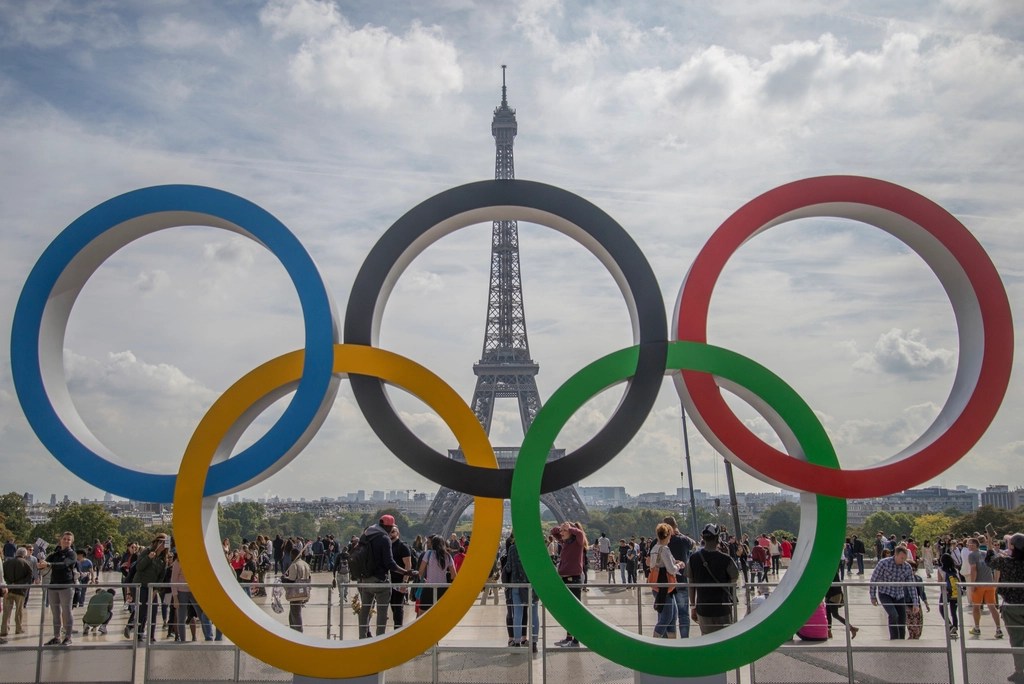
In 1984, Mary Lou Retton tumbled her way straight into my heart.
It was just before my second birthday. I was in an Atlanta hospital for open heart surgery as I watched the 16-year-old Olympic hopeful. She became my hero.
As soon as I was able, my mom enrolled me in gymnastics classes. For several years of my childhood I knew how it felt to flip across those blue mats, walk across balance beams and bend myself out of shape.
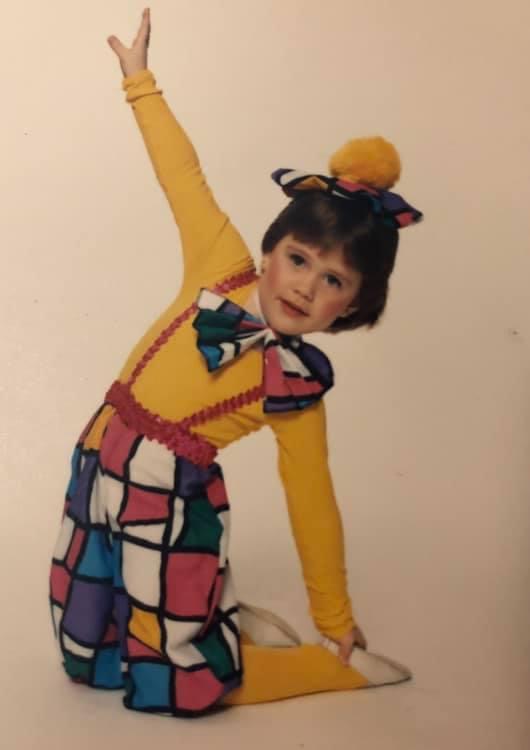
It didn’t last.
As a young child, my gymnastics teacher told me I had a jello butt while I attempted to do a handstand. When I started crying, she sent me to the bathroom alone until I stopped. I never did learn to do a handstand.
Turns out, I didn’t have the strength you need to be an Olympic athlete – and I don’t just mean my weak core.
I went on to be an OK softball player. Then, in my teen years I traded the diamond for the stage. I have pretended to be a runner for the last 15 years, off and on as my joints allow me to push forward. But that’s the extent of my athletic career.
Even though I didn’t have what it took to fly through the air, leap across the balance beam or flip around on uneven bars, I am always amazed at those who do.
I’m sure this year’s Olympic gymnasts would have had the same effect on toddler me.
I’m not even going to pretend I’m capable of describing their feats of athleticism. And not just the gymnasts, but the swimmers and divers, the runners and cyclists, the fencers and skateboarders…
I’ve watched the Olympics here and there over the years. I remember laying on my parents’ green carpet with a box fan blowing over my bare legs watching. I wanted so desperately to attend events when they came to Atlanta in 96 but didn’t get to. I wanted even more to travel to Sydney in 2000, the summer just after I graduated high school. But if I couldn’t go an hour down the road, I don’t know why I thought I could travel around the world. (Ah, dreamer days gone by.)
Though the whole premise of the Olympics is competition, the idea is to set your rivalries aside.
“There is more that unites us than divides us,” according to the International Olympic Committee. “Blending sport with culture and education, Olympism seeks to create a way of life based on the joy found in effort, the educational value of good example and respect for universal fundamental ethical principles. The goal of the Olympic Movement is to contribute to building a peaceful and better world by educating youth through sport practiced without discrimination of any kind and in the Olympic spirit, which requires mutual understanding with a spirit of friendship, solidarity and fair play.”
Let’s be real. Some of you missed the assignment this year.
As I marveled at the incredible stories — from America’s favorite gangsta turned grandpa, Snoop Dogg, to the diver who knits, the pregnant fencer, the Clark Kent of men’s gymnastics, bowing down on the podium to show respect, world records and so much wholesomeness – some tore apart headlines and memes without verifying the facts.
A celebration of diversity became a platform for controversy.
It’s easy to do. It’s easy to get swept up in the emotions of a moment and feel righteous indication.
I once wrote and published a column full of disgruntled preaching that was inspired by a meme, which turned out to not be entirely factual. A large piece of the puzzle was missing. But I had already, in an attempt reveal an injustice in this world, reacted.
Even as a journalist, I hadn’t slowed down enough to do the actual research.
I received an email from someone lambasting me, as someone who calls myself a journalist, I should have enough integrity to research the incident in the meme and not just rely on social media. It was more heated and more colorful than that.
But, they were right.
I had two choices: humility or pride.
I could own up to my mistake, tell my editor my factual error and print a retraction and apology, or I could become defensive.
I responded to the email thanking them and assuring them my face was red. Their next correspondence was toned down, more understanding, more assuring that we all make mistakes and they were sorry for their initial tone.
I stood up and walked into my editor’s office, closed the door and sat down, my head low as I confessed my error, and we talked about the retraction and apology I had to issue.
I learned an important lesson that day.
I had to quit looking for a fight to prove my faithfulness.
It’s easy to react. It’s easy to be angry. It’s easy to flip tables.
What’s not easy is self discipline and control. What’s not easy is taking a step back to acknowledge our emotions before we react.
What’s not easy is admitting that we don’t know everything. Solomon, who renowned for his incredible wisdom, even noted in Proverbs 3:5 “Lean not on your own understanding.”
Some religious leaders want you to think how you react to your personal beliefs proves your worthiness. But Jesus warns us. He says of religious leaders, “They crush people with unbearable religious demands and never lift a finger to ease the burden” (Matthew 23:4).
Sometimes we’re so quick to defend our beliefs we miss the point.
We learn in Galatians 5:22-23 that the fruits of the spirit include “love, joy, peace, forbearance, kindness, goodness, faithfulness, gentleness and self-control.”
In James’ epistle he reminds us “Everyone should be quick to listen, slow to speak and slow to become angry because human anger does not produce the righteousness that God desires” (1:19-20).
But our world today praises anger. Nothing brings people together as quickly as being upset over a common enemy. We pretend we’re doing it for the “right reasons.” We pretend that by sharing that meme, sharing that story, sharing that 30-second video snippet that we’re taking a stand, that we’re proving to the world our faith.
We aren’t.
We never were.
The Olympics Games aren’t the first time we’ve seen these incendiary debates. They won’t be the last. It’s a part of our culture. Unfortunately, it’s a part of our church.
In a world saturated with instant information and instant controversy, we should approach discussions with curiosity, empathy and a willingness to understand different perspectives.
There’s a lot we can be upset about in this world, but the Olympics shouldn’t be one of them.





 Misty D. Watson
Leave a comment