
I don’t remember the first time someone called me a writer.
It’s all I ever wanted to be…. Well…
Once I outgrew the naivety of childhood and my desire to own a horse farm, be a teacher and have a daughter named Katie Lee, then that’s when I wanted to be a writer.
But I remember the first time I felt like a writer. I was around 7 and wrote a poem about flying a kite at the beach – something I had never done and would never successfully do. Flying a kite is surprisingly hard. I’d probably also only visited the coast once in my life at this point.
It’s the one time the axiom write what you know didn’t apply. I knew my poem made people breathe in the salty air and feel the sticky breeze whipping pieces of sand on their faces.
Words had power. And I wanted to make people feel.
I later learned I was not meant to write poetry. My stint in poetry was the written equivalent to a girl dressed in all black, layers of eyeliner under her eyes, whining about her life in a diary with a cheap lock that you didn’t even need a key to open. The height of my career as a poet was when I won an award in middle school for a collection of my poetry that featured lines such as “it made me cry because it made me laugh,” dripping with the insight of a 13 year old who was clearly experiencing emotions no one else had ever known. Clearly.
Even so, my ability to form stories on paper sparked teachers’ interest. They entered me into essay competitions, young author exhibitions and even speech contests. Did they not know speech contests meant you also had to say what you’d written out loud? To a panel of judges? Within a set time frame? I’m much too verbose to express myself in less than 5 minutes, and more than once what separated me from first place was that time penalty.
My teachers pushed me, believed in me, encouraged me to take my writing further and further.
My fourth grade teacher, dear Mrs. Betty Hammett, once let me take class time to write an article for the school newspaper in exchange for dedicating my first book to her. I may not have written a book, yet. But I mentioned her plenty later on when I still had my newspaper column. Had I tested well enough to be the Star Student, she’d have been my Star Teacher. She is my Star Teacher, even if she didn’t get that title officially.
By the time I was a freshman I had it figured out. I was a nonfiction writer. I didn’t realize it at the time, but I loved history and sociology, as well as a little psychology, because I loved learning about people and their experiences. I began to see that everyone has a story to tell, and I wanted to be the person to tell them.
I’d tell people I was going to be a journalist, a writer for a newspaper. I wanted to make an impact, win Pulitzers (yes, plural), change the world for the better. My words mattered; people’s stories mattered.
I had a gift, and I was going to use it.
More contests, more competitions, exhibitions, and even more speeches. But I kept falling just short of winning. My speeches got docked for going 10 seconds over the time limit, but in contrast, my essays weren’t detailed enough.
Still, teachers pushed. They taught me grammar, how to research, marked my papers with red ink. One of my favorites often scribbled KISS (keep it simple, stupid) across the top margin. Despite papers that bled, I got A’s. They knew I could meet higher expectations. They knew I wanted higher expectations. So they gave me notes upon notes upon notes for next time.
My desire to become a writer never wavered. I am one of the few people I know who never changed my major in college. Journalism. I wanted the glamor of investigating, bringing injustices into the spotlight, uncovering secrets. I wanted the rush of a late night phone call with a scoop. I wanted to meet people, listen to them, learn from them, then share their experience with the world.
I wanted to be a writer. It’s so simple really. A writer, someone who tells stories for a living. Stories that need to be told and read and shared.
So I became that….
Until the economy collapsed and newspapers went under and people grew more skeptical of the actual researched truth and the digital age began taking over my career. Social media and websites meant no one wanted to wait until tomorrow morning to read the full story. They wanted a headline now, and good luck getting them to read more than the first line.
I adjusted. I crossed that dark path reporters sometimes cross. I went into public relations. Except, by the time I crossed that line we were just calling it communications. It sounds slightly less evil to a newsroom.
Communications wasn’t just about writing press releases and being a spokesperson like it was in the 80s and 90s. It meant I had to pull back out my knowledge of digital media from that one class I took a decade before. I had to learn to run social media for a brand – which wasn’t a thing when I finished my undergrad so we didn’t learn it as a tool. Communications meant emails, newsletters, analytics, SEO, HTML, how to write marketing content.
It meant I wasn’t writing as much anymore. At least, not the way I wanted to write, the way I meant to write.
And when that wasn’t fulfilling anymore (partially thanks to a never-ending global pandemic), I found yet another job.
I sold out happily. It was the first time in my entire adult life I could live comfortably without multiple side hustles.
So what if I never got to tell peoples’ stories anymore. So what if I never left my home. This is what it took to survive our economy and our society. I adapted.
I gave up my passion in life so I could have a life.
I was called a writer. I became a writer.
What am I now?
I adapt. I survive. I move forward.
It’s hard not to feel a bit nihilistic. OK. More than a bit. But I’m a cheerful nihilist, who likes rainbows and flowers and butterflies and turtles along with my black void.
Let me pull out those black clothes again, that eyeliner pencil that I’d hold up to a flame before applying thick lines under my eyes. I know how it sounds. It sounds like I’m slipping back into that emo kid feeling sorry for myself for being misunderstood as I scribble poetry into a diary with a cheap lock, but I’m not.
From the time I was 13, I poured myself into my fleeting dream.
The irony is – my peers who didn’t have it figured out in college actually had it figured out. They flowed where the river led while I fought a current increasing in strength.
It took a lot of failure and a lot of missteps. I’m still not the best at letting go to see where life takes me. My path to acceptance comes with a lot of protesting first.
The writer I once dreamed of becoming no longer exists.
Or, at least, she’s evolved into someone less optimistic and determined yet more resilient, and perhaps even a bit wiser (maybe?).
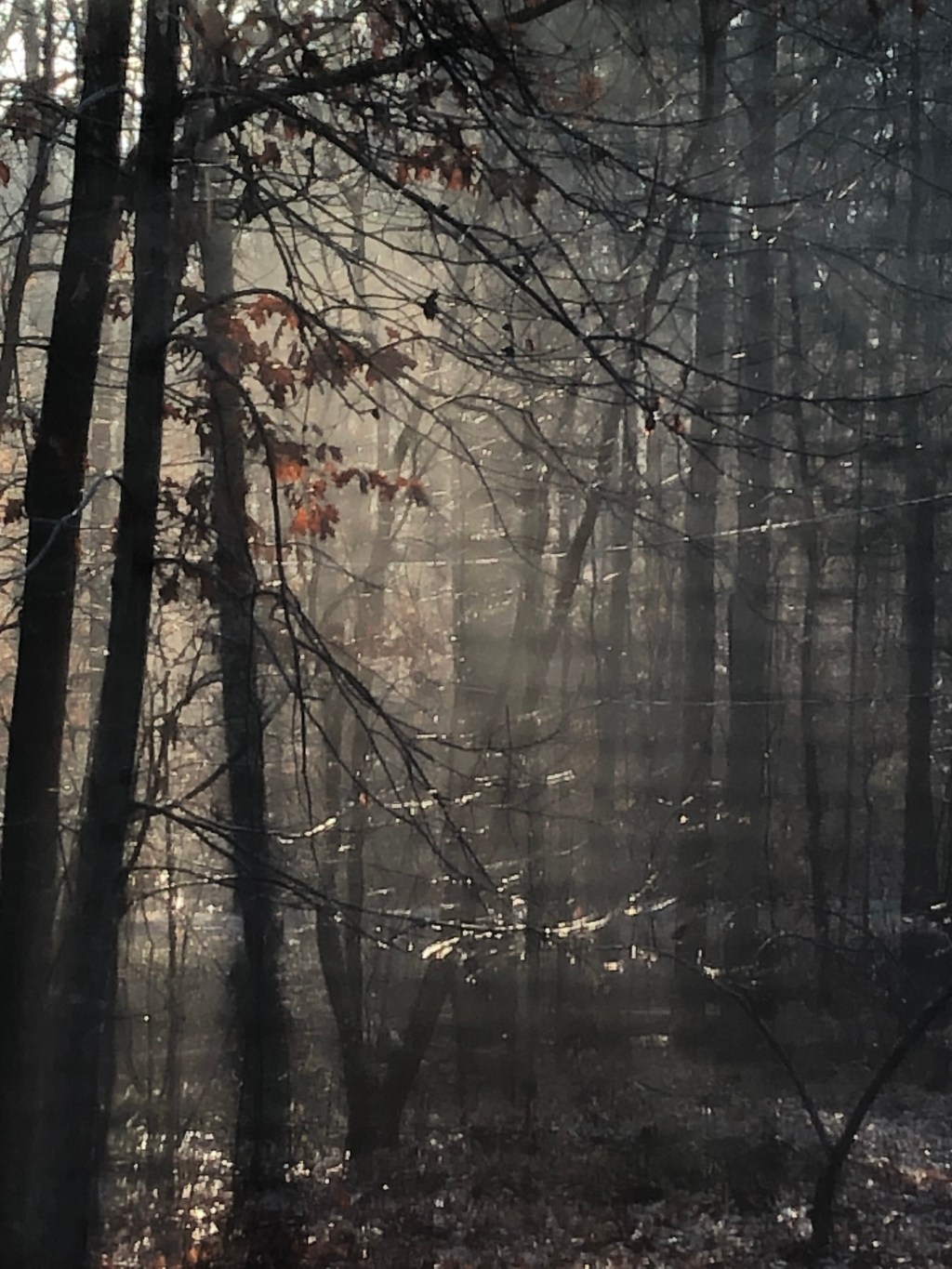
The writer who once chased Pulitzers now chances moments of quiet reflection where words are not born from ambition, but rather a deep-seated need to understand. That’s why on this peaceful Saturday morning following a stormy night, I sit on my porch writing with a cup of tea and a dog snoring at my feet.

What does it mean to be a writer in my forties? It’s a question I’m still trying to answer, one word at a time.
But there’s one thing I know for certain: I am a writer.



 Misty D. Watson
Leave a reply to Cynthia Edwards Cancel reply